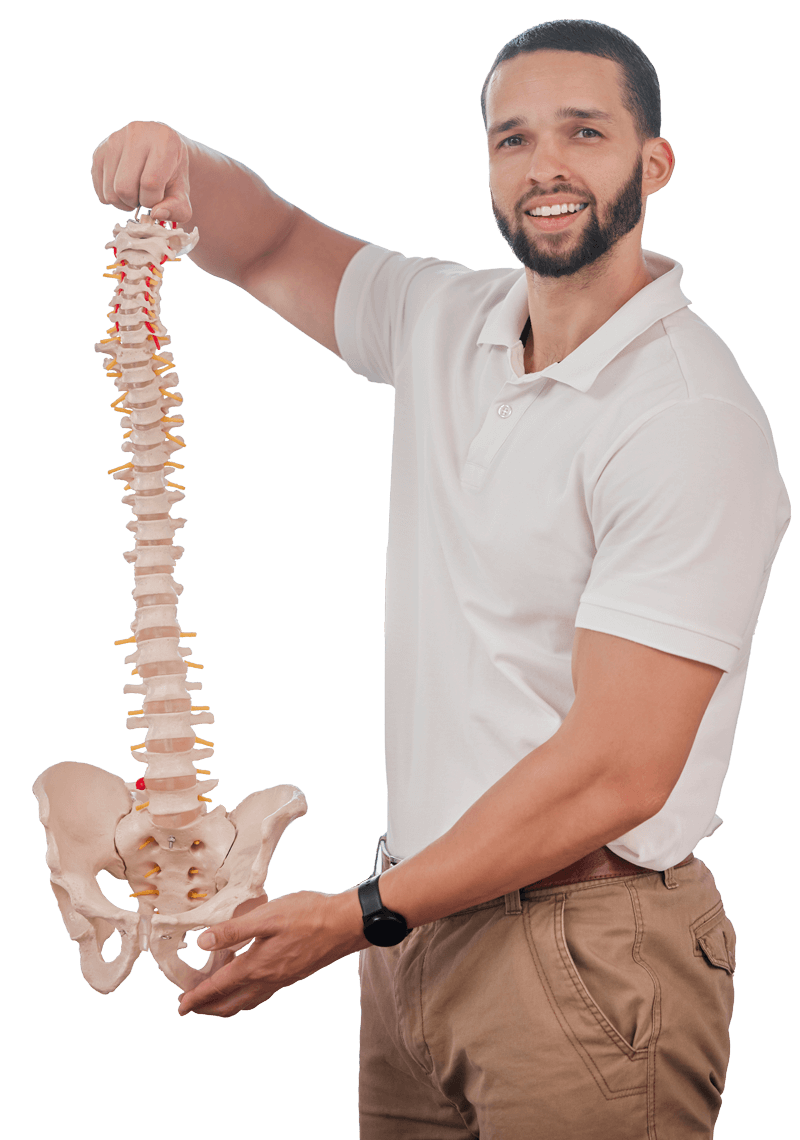

Middle back pain on the right side is a common complaint that can affect posture, breathing comfort and daily activities. Although lower back pain receives more attention, pain in the thoracic (mid-back) region should not be ignored, especially when it persists or is accompanied by other symptoms.
At Care2Cure Physiotherapy in Barrhaven, Ottawa, the team uses a holistic approach to assess mid-back pain. Treatment considers posture, work demands, stress, overall body health and movement patterns, not just the location of pain.
What Is Middle Back Pain?
The middle back, or thoracic spine, lies between the neck and lower back. It consists of twelve vertebrae (T1–T12) that attach to the rib cage. This region is relatively stable compared with the neck and lower back, so pain here often signals an underlying issue.
Middle back pain can be:
- Dull and constant.
- Sharp or stabbing with certain movements.
- Burning or tingling if nerves are involved.
- Associated with muscle tightness that makes deep breathing uncomfortable.
- Radiating to the chest, ribs or shoulder.
Common Causes of Right-Sided Middle Back Pain
Pain on the right side of the mid-back can arise from muscles, joints, nerves or nearby organs.
Muscular and Postural Causes
- Poor posture: Prolonged desk work, laptop use, phone use (“text neck”) and slouching can strain the muscles between the shoulder blades.
- Muscle strain or overuse: Lifting heavy objects incorrectly, sudden twisting, repetitive sports or work movements.
- Thoracic stiffness: Limited mobility in the thoracic spine and ribs can contribute to aching and tightness.
Spinal and Structural Causes
- Herniated or degenerative discs: Disc changes in the thoracic spine can irritate nearby nerves.
- Spinal arthritis: Age-related wear and tear in the facet joints.
- Osteoporosis: Weakening of the vertebrae, more common after menopause.
- Scoliosis or kyphosis: Abnormal curvature of the spine that alters load distribution.
Referred Pain From Organs
Sometimes, pain in the right mid-back is “referred” from internal organs:
- Gallbladder issues: Gallstones or inflammation can cause pain in the upper right abdomen that spreads to the right shoulder blade or mid-back, often after fatty meals.
- Kidney problems: Kidney stones or infection may cause flank pain that radiates to the mid-back, often with urinary symptoms, fever or nausea.
- Liver, lung or other conditions: Less commonly, other thoracic or abdominal conditions can refer pain to this area.
Because organ-related pain can mimic musculoskeletal pain, new, severe or unexplained right-sided mid-back pain should be assessed by a healthcare professional.
Middle Back Pain in Females vs Males
In Females
Women may experience right mid-back pain related to:
- Hormonal changes: Ligament laxity during menstruation or menopause.
- Pregnancy: Added weight and postural strain.
- Osteoporosis: Higher risk after menopause.
- Gallbladder disease: More common in women; may refer pain to the right mid-back.
Additional symptoms such as nausea, fever, chest pain or abdominal discomfort may suggest organ involvement and warrant prompt medical evaluation.
In Males
In men, causes are often mechanical or structural:
- Muscle strain: Heavy lifting, gym workouts, sudden movements.
- Disc problems: Herniation or degeneration.
- Spinal arthritis: Age-related joint changes.
- Kidney issues: Flank pain radiating to the mid-back.
- Gallbladder disease: Less common but possible.
Persistent pain with fever, unexplained weight loss or worsening symptoms requires medical assessment.
Common Symptoms and Signs
Symptoms vary depending on the underlying cause:
- Dull ache along the right thoracic spine.
- Sharp, stabbing pain triggered by movement or twisting.
- Muscle tightness that makes deep breathing uncomfortable.
- Pain spreading to the chest, ribs or right shoulder.
- Numbness or tingling if a nerve is involved.
- Stiffness and reduced mobility.
- Difficulty sleeping due to discomfort.
When Is Right Middle Back Pain Serious?
Sudden, sharp pain may indicate:
- Acute muscle spasm or strain.
- Disc herniation or fracture.
- Kidney stones or infection.
- Gallbladder attack.
Red Flag Symptoms (Seek Immediate Care)
Contact a healthcare professional promptly or seek emergency care if you experience:
- Loss of bladder or bowel control.
- Fever with back pain.
- Numbness or weakness in the legs.
- Chest pain or breathing difficulty.
- Severe abdominal pain, especially with nausea, vomiting or jaundice.
- Unexplained weight loss.
- Pain after significant trauma or a fall.
These symptoms may indicate serious spinal or organ-related conditions.
Muscular vs Spine-Related Middle Back Pain
Muscular Causes
Typical features:
- Localised pain and tenderness.
- Stiffness and mild swelling.
- Pain worsens with specific movements or prolonged positions.
- Often related to posture, overuse or strain.
Spine-Related Causes
Typical features:
- Sharp or radiating pain.
- Tingling, numbness or weakness.
- Restricted movement.
- May be associated with disc, joint or nerve involvement.
A physiotherapist can help differentiate between these patterns through assessment and guide appropriate treatment.
How Is Middle Back Pain Diagnosed?
Diagnosis usually begins with a detailed conversation about your symptoms, lifestyle and health history. Your clinician may ask about:
- When the pain started and how it has changed.
- The type of pain (dull, sharp, burning).
- Activities that worsen or relieve symptoms.
- Your work, daily routine and stress levels.
- Previous injuries or medical conditions.
A physical examination may include:
- Observing your posture, standing and walking.
- Checking shoulder alignment and spine curvature.
- Assessing range of motion in the thoracic spine, shoulders and ribs.
- Testing strength, sensation and reflexes.
Role of Imaging
Most middle back pain does not require immediate imaging. When needed, tests may include:
- X-rays: To assess bone structure, alignment, fractures or arthritis.
- MRI: To evaluate discs, nerves and soft tissues.
- Dexa scan: To measure bone density in suspected osteoporosis.
Imaging is usually reserved for cases with red flags, trauma or symptoms that do not improve with conservative care.
Treatment Options for Right-Sided Middle Back Pain
Self-Care in the First Days
For mild, recent pain without red flags:
- First 48 hours: Ice packs for 15–20 minutes every 2–3 hours to reduce inflammation.
- After 48 hours: Heat therapy (warm showers, heating pads) to relax tight muscles.
- Gentle movement: Light stretching, thoracic rotations, cat–cow stretches, shoulder blade squeezes.
- Low-impact activity: Walking, swimming or stationary cycling as tolerated.
Avoid prolonged bed rest. Gentle, regular movement supports recovery.
Physiotherapy and Professional Care
If pain persists beyond a few days, recurs frequently or interferes with daily activities, professional assessment is recommended.
A physiotherapist may provide:
- Manual therapy to reduce muscle tension and improve joint and rib mobility.
- Targeted exercises for thoracic mobility, scapular stability and core strength.
- Posture and ergonomic advice for work, driving and home.
- Breathing and rib mobility exercises.
- Gradual return-to-activity planning.
Care2Cure Physiotherapy uses a comprehensive approach that considers posture, stress, overall body health and movement patterns when treating mid-back pain.
When to See a Doctor or Physiotherapist
Seek professional assessment if you experience:
- Pain lasting more than 2–4 weeks despite self-care.
- Numbness, tingling or weakness in the arms or legs.
- Pain after trauma or a fall.
- Unexplained weight loss, fever or other systemic symptoms.
- Symptoms suggestive of gallbladder or kidney involvement (abdominal pain, urinary changes, nausea, jaundice).
Early evaluation helps identify the cause and prevents complications.
How Care2Cure Physiotherapy Can Help
Care2Cure Physiotherapy in Barrhaven, Ottawa, offers assessment and treatment for middle back pain, including right-sided thoracic pain. The clinic’s approach looks beyond the painful area to consider contributing factors such as desk work, driving, stress, previous injuries and overall movement patterns.
Treatment may include:
- Detailed assessment of the thoracic spine, ribs, shoulders and posture.
- Manual therapy to improve mobility and reduce muscle guarding.
- Individualised exercise programmes for thoracic mobility, scapular control and core stability.
- Education on posture, ergonomics and self-management.
- Coordination with your physician if further medical investigation is needed.
If you are searching for physiotherapy near me in Barrhaven or Ottawa for mid-back pain, Care2Cure can discuss your symptoms and recommend an appropriate plan.
Physiotherapy Ottawa: Comprehensive Mid-Back Pain Care
Patients seeking physiotherapy Ottawa for middle back pain on the right side can benefit from a thorough, individualised approach. At Care2Cure, the team assesses not only the thoracic spine but also the neck, shoulders, ribs and core, recognising that mid-back pain often involves multiple regions.
Whether your pain is related to prolonged sitting, lifting, sport, stress or an old injury, a tailored programme can help improve mobility, reduce muscle tension and build lasting strength. For those searching online for physiotherapy Ottawa, Care2Cure provides evidence-based care that combines manual therapy, targeted exercises and practical lifestyle advice to support long-term recovery and reduce the risk of recurrence.
Frequently Asked Questions
What is middle back pain?
Middle back pain occurs in the thoracic spine (T1–T12), between the shoulder blades and the bottom of the rib cage. It supports the upper body and protects the organs.
How do you fix middle back pain?
Many cases improve with a combination of self-care (ice/heat, gentle movement), physiotherapy, posture correction and targeted exercises. Persistent or severe pain requires professional assessment.
What can cause middle back pain on the right side?
Common causes include muscle strain, poor posture, thoracic joint stiffness, disc or joint changes, and referred pain from the gallbladder or kidney.
How long does it take to fix middle back pain?
Recovery time varies. Acute strains may improve in 1–2 weeks, moderate conditions in 4–6 weeks, and more complex or chronic cases may take longer.
What sleeping position is best for middle back pain?
- On your back with a pillow under your knees.
- On your side with a pillow between your knees.
- Avoid sleeping on your stomach if it worsens your symptoms.
- Use a supportive mattress and pillow.
Can gallbladder or kidney problems cause right mid-back pain?
Yes. Gallbladder issues can refer pain to the right shoulder blade or mid-back, often after fatty meals. Kidney stones or infection can cause flank pain with urinary symptoms, fever or nausea.
Book Your Appointment at Care2Cure Physiotherapy
Middle back pain on the right side can be disruptive, but many people improve with appropriate assessment and treatment. If your pain is persistent, recurring or affecting your daily activities, a thorough evaluation can help identify the cause and guide your recovery.
Contact Care2Cure Physiotherapy in Barrhaven, Ottawa, to schedule an appointment and discuss a personalised plan for your mid-back pain.